Dominic PajakSenior Director, Edge AI · Arm
Dominic Pajak is a British technology executive and computer scientist. He launched Arm processors now inside billions of electronic products, and has consulted with semiconductor, consumer, and industrial companies worldwide. At Arduino, he collaborated with Google to create a developer-friendly embedded AI kit. Dominic holds a PhD in Computer Science from the University of Leeds.
His mission is to make technology that benefits people everywhere. As Senior Director, Edge AI at Arm, that means enabling energy-efficient, private AI on the devices you use every day.
Independent press, publications, and talks covering my work.
I've seen first hand that vast scale is possible if you inspire people with the potential of technology, and empower them to create.
Technology keeps moving forward; as an industry we have to be life-long learners, and teachers.
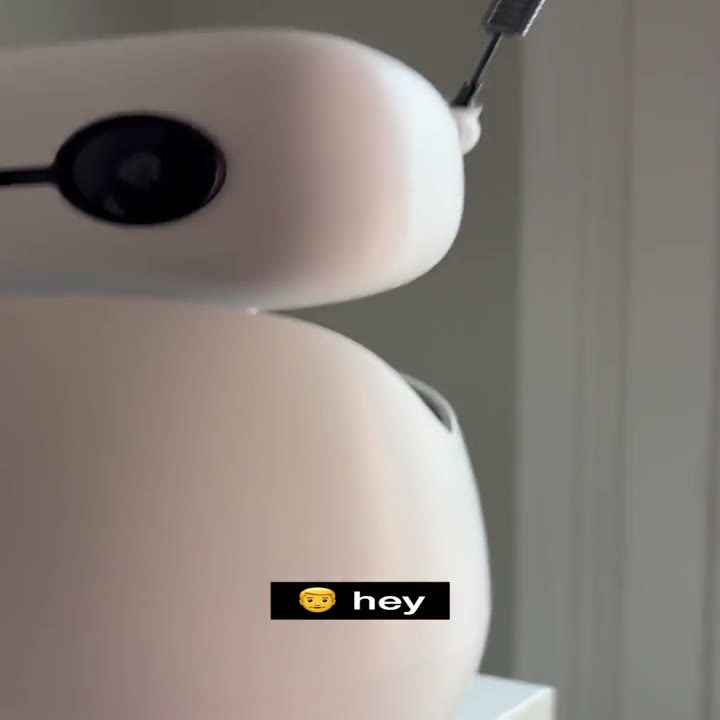
Beta testing Reachy Mini with on-device AI — an on-device AI app for Hugging Face / Pollen Robotics' Reachy Mini, with voice-to-voice reactions running entirely on a Raspberry Pi 5.
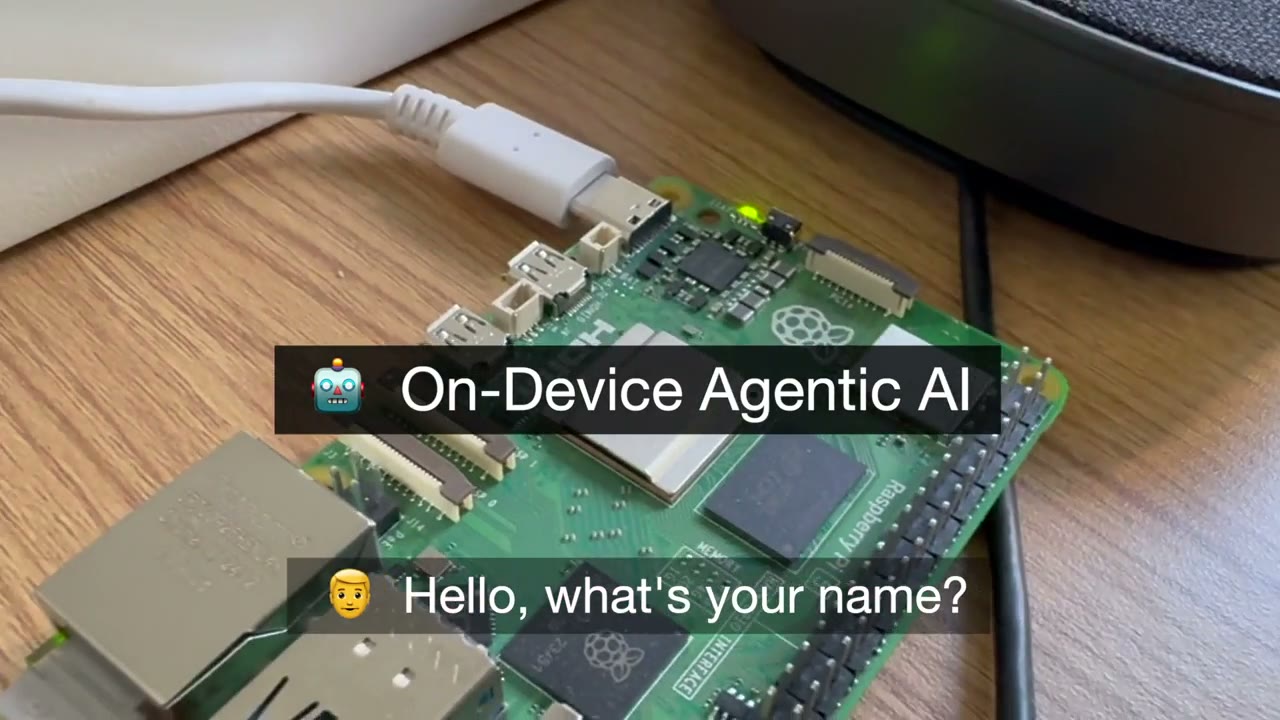
An agentic AI loop running 100% locally on an Arm-based Raspberry Pi 5: voice to plan to act to observe to summarise to speak to remember.
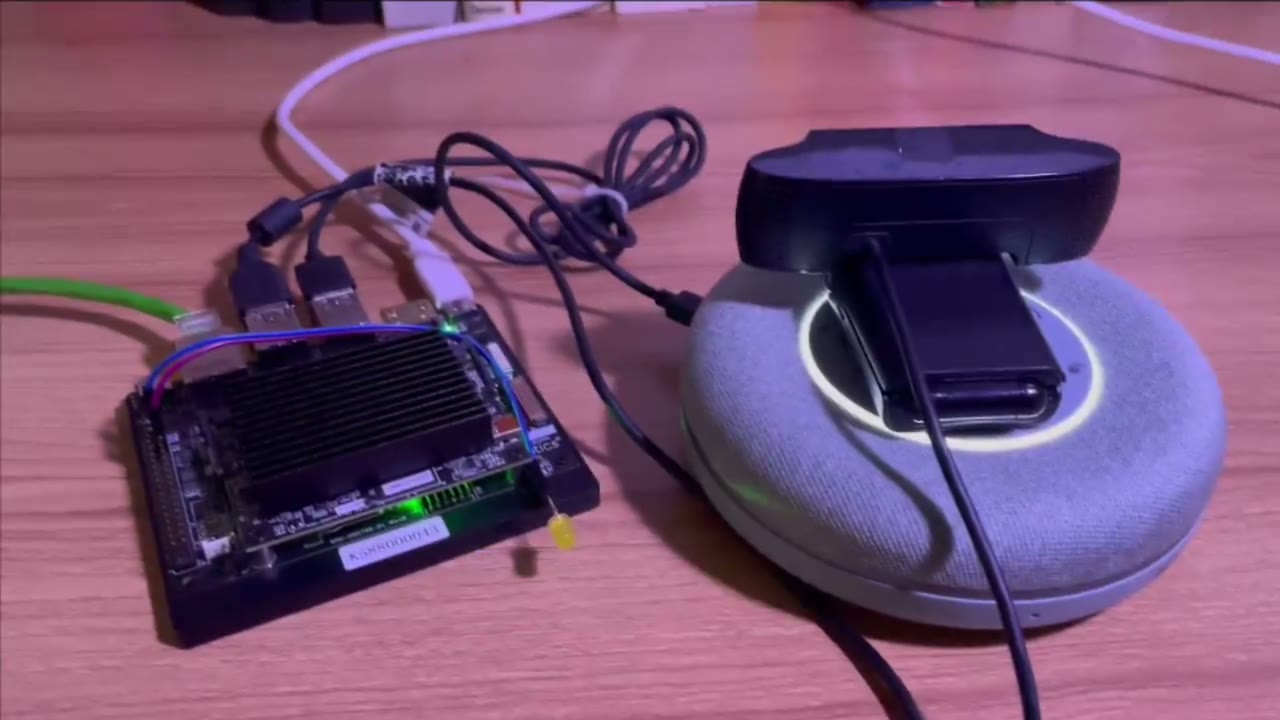
Demonstrated at CES 2025, a multi-modal on-device voice assistant that can see, using an on-chip NPU to accelerate vision, with the agent accessing it via tool calling.
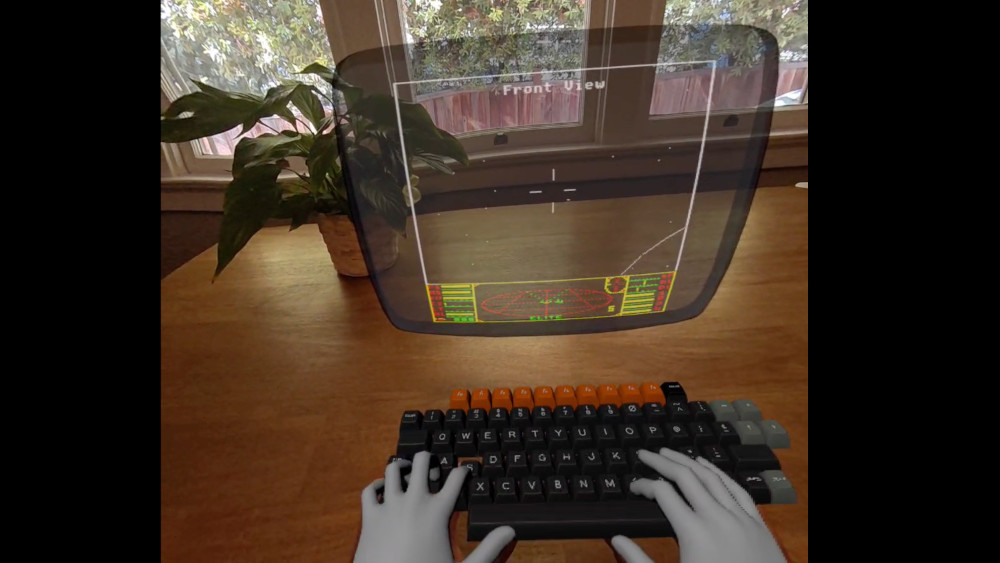
Virtual Beeb is a free computer simulation in a webpage, still serving 5K monthly active users. Now ported to mixed-reality using WebXR, you can experience it today on Meta Quest 3 and Apple Vision Pro. You can also read the Making of... blog!
Imagine conjuring any object into existence on command. In the VoxelAstra project I combined OpenAI Whisper, GPT-4 and three.js to create a mixed-reality experience that let you do just that. Built over the holidays, it was mainly just tested with snowmen.
This project for READY Robotics used live motor torque data from a Universal Robots UR5 cobot for training and inference of predictive-maintenance AI. As well as integrating this flow end-to-end, I built a live dashboard and 3D visualization.
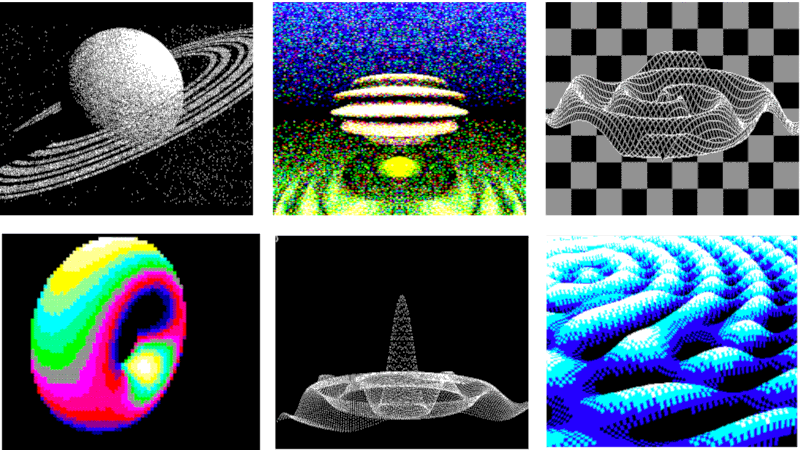
BBC Micro Bot took geek Twitter by storm, as people pushed the limits of possibility within one tweet of retro code. The bot I built on AWS served thousands of users, who between them submitted over 10,000 programs and gained over 10 million impressions. Now on Mastodon.
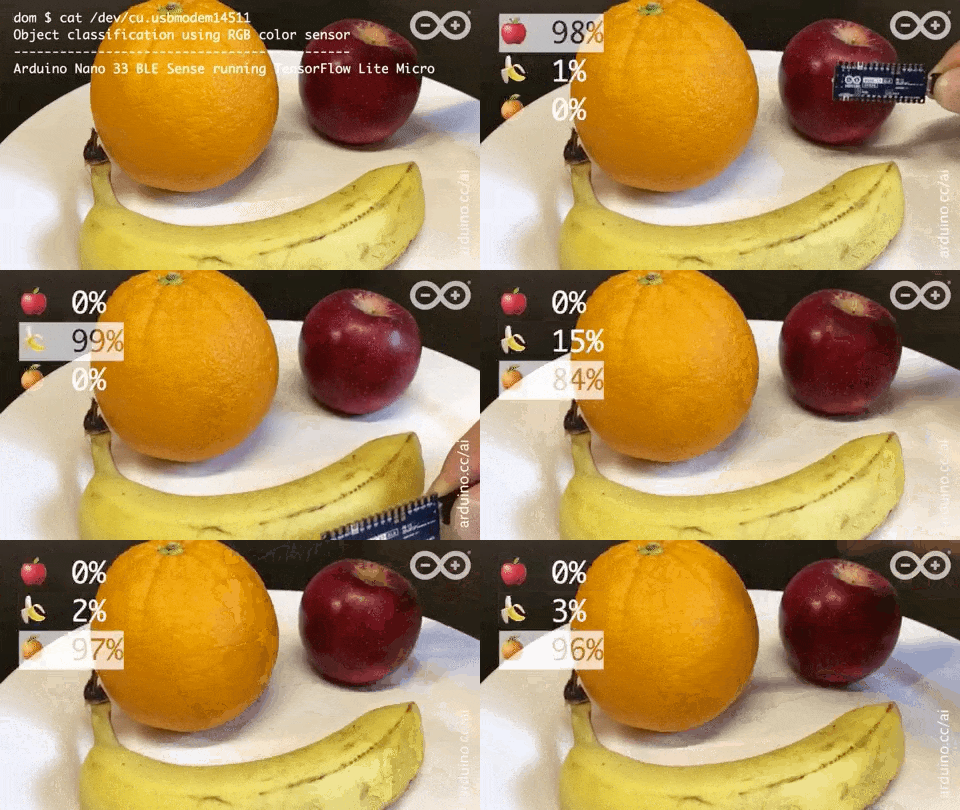
At Arduino I used color and proximity sensor data with on-device ML to detect fruit variety and ripeness. The accompanying blog I wrote is featured in the TensorFlow Blog.
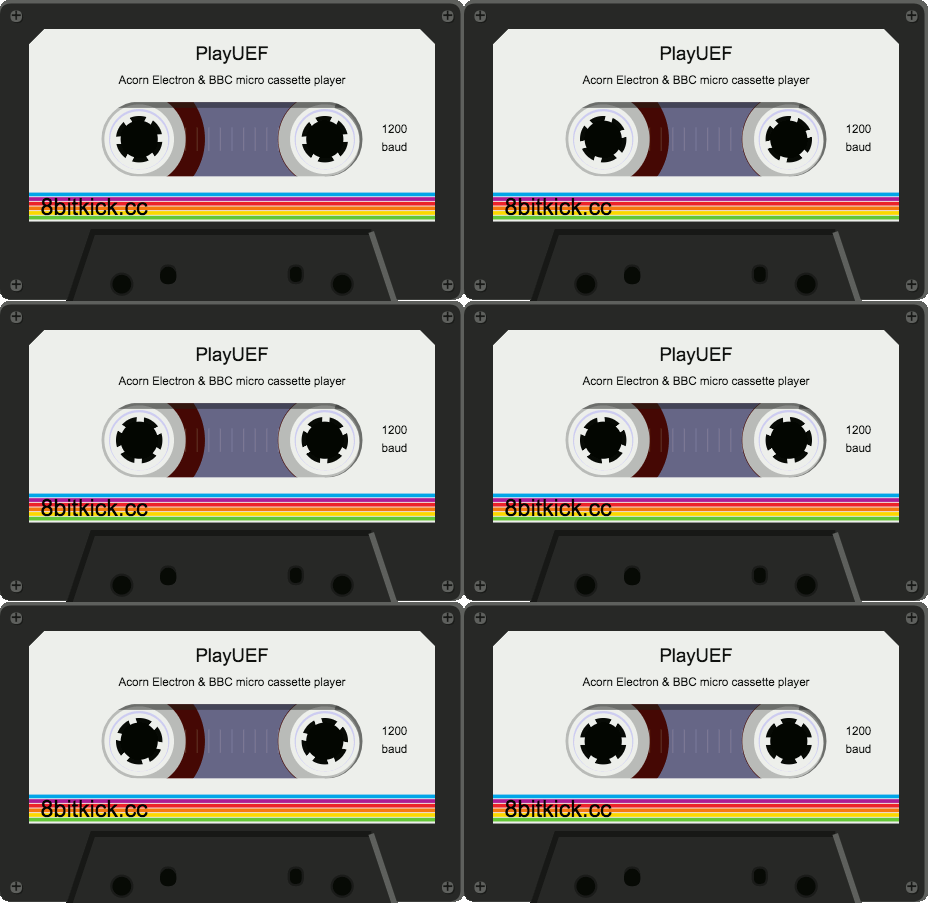
PlayUEF is a JavaScript web app that loads classic Acorn and BBC cassette games into an emulator, or a real 8-bit machine, straight from the browser.
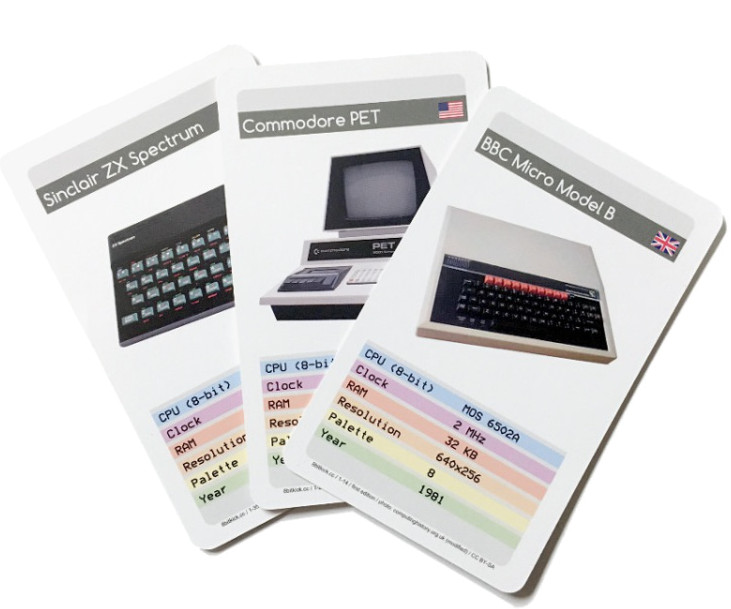
Home Computers was funded on Kickstarter at over 10× its goal, this collectable card deck celebrates the 8-bit machines that inspired a generation. Designs later donated to the Centre for Computing History, a STEM charity in Cambridge, UK.
Go back and try the interactive Conway's Game of Life at the top of the page :)
"I learnt to program the BBC Micro at school. I certainly owe my career to that early start."
Dominic Pajak, IEEE Spectrum, 2020